Understanding Illinois Assisted Living Licensing: A Guide for O'Fallon Families
When families in O'Fallon start comparing senior living options, the terms can be confusing. Assisted living, shared housing, supportive living, memory care, nursing home: each has a specific meaning under Illinois law. Knowing how the state licenses these settings helps you ask the right questions and check that a provider is licensed for the care your parent needs. This guide explains the basics in plain language.
Who licenses assisted living in Illinois
The Illinois Department of Public Health (IDPH) Division of Assisted Living is responsible for state licensure and surveys of assisted living and shared housing establishments. According to IDPH, regulations were adopted in December 2001, and the department began licensing establishments in July 2002. Life safety and physical plant surveys are performed by IDPH's Design and Construction Section before licensure, and every establishment must submit an annual renewal application (IDPH, Assisted Living).
The governing law is the Assisted Living and Shared Housing Act, 210 ILCS 9, with rules in the Illinois Administrative Code.
Assisted living establishments
Under the Act, an assisted living establishment is a place that provides sleeping accommodations for at least three unrelated adults, at least 80% of whom are 55 or older, and that provides (210 ILCS 9/10):
- Services based on a social model, which treats the resident's unit as their own home
- Community-based residential care for people who need help with activities of daily living, with personal, supportive, and intermittent health-related services available 24 hours a day if needed
- Mandatory services
- A homelike physical environment with individual living units
Shared housing establishments
A shared housing establishment is a free-standing residence for 16 or fewer people, at least 80% of whom are 55 or older and unrelated to the owners and one manager. It provides the same social model, 24-hour availability of help with daily activities, and mandatory services (210 ILCS 9/10). Shared housing is often a smaller, more home-like setting.
The mandatory services
Illinois law requires every licensed assisted living and shared housing establishment to provide, directly or through an arranged provider:
- Three meals a day
- Housekeeping, including vacuuming, dusting, and cleaning the resident's unit
- Personal laundry and linen services
- Security 24 hours a day
- An emergency communication response system available 24 hours a day
- Assistance with activities of daily living as required by each resident
Activities of daily living are defined as eating, dressing, bathing, toileting, transferring, and personal hygiene.
Who can and cannot live in assisted living
Illinois sets limits on who can be admitted or remain. A person may not be accepted or remain if the establishment cannot provide appropriate services or staff. The law also lists specific conditions, including when a person (210 ILCS 9/75):
- Poses a serious threat to themselves or others
- Requires total assistance with two or more activities of daily living
- Requires more than one paid caregiver at a time for an activity of daily living
- Requires more than minimal help moving to a safe area in an emergency
- Requires certain medical treatments, such as IV therapy, tube feeding, sterile wound care, or routine insulin injections, unless self-administered or provided by a licensed health care professional
The law's definition of severe mental illness specifically does not include Alzheimer's disease and other forms of dementia, so a dementia diagnosis alone does not bar a person from assisted living. There are also exceptions for some residents receiving hospice care when all parties agree.
Supportive living is different
Supportive living facilities are a separate category, excluded from the definition of assisted living in the Act. Illinois' Supportive Living Program, run by the Department of Healthcare and Family Services, is a Medicaid alternative to nursing home care in participating settings. Residents keep a $120 monthly personal needs allowance and contribute the rest of their income toward lodging and meals (Illinois HFS, Supportive Living Program fact sheet). The SLP helpline is 844-528-8444.
Dementia care disclosures
Under the Alzheimer's Disease and Related Dementias Special Care Disclosure Act, a facility that offers care for people with Alzheimer's disease or a related dementia through a special program or unit must disclose how that care is provided, including its philosophy, admission and discharge processes, care planning, staffing ratios and training, physical environment, activities, family role, and costs (210 ILCS 4/15). Families considering memory care should ask for this disclosure. Our guide to memory care costs in O'Fallon offers more on comparing programs.
Residents' rights on involuntary termination
Illinois protects residents from abrupt discharge. In most cases, an establishment must give 30 days' written notice of an involuntary termination to the resident, IDPH, and the long-term care ombudsman. The resident has the right to appeal and, in general, may remain while the appeal is decided. For nonpayment, the resident must receive 30 days' notice and has 15 days to cure the nonpayment (210 ILCS 9/80).
How to check a provider
- Ask what license the provider holds: assisted living, shared housing, or supportive living, and whether it operates a dementia care program.
- Ask to see the license and the most recent survey results.
- Ask for the dementia disclosure if memory loss is a concern.
- Read the contract for terms on fees, increases, and termination.
- Know where to report concerns. IDPH accepts complaints by form and through its Central Complaint Registry at 800-252-4343.
- Contact the ombudsman. Senior Services Plus serves St. Clair County as the Long-Term Care Ombudsman at 618-465-3298 (AgeSmart Community Resources, St. Clair County services).
Why licensing matters for costs
The licensing category affects how care is paid for. Assisted living and shared housing are usually private pay, sometimes with help from long-term care insurance or VA benefits. Supportive living participates in Medicaid. Our guide to paying for assisted living in Illinois explains these options.
A note on probationary and regular licenses
Illinois issues two types of licenses under the Act. A probationary license goes to an applicant that has not held a license under the Act before, or after a license transfer. A regular license goes to a licensee in substantial compliance with the Act and its rules (210 ILCS 9/10). A newer establishment may hold a probationary license for a time. Ask what type of license a provider holds and when it was issued.
About Joe's Place Caring Cottage
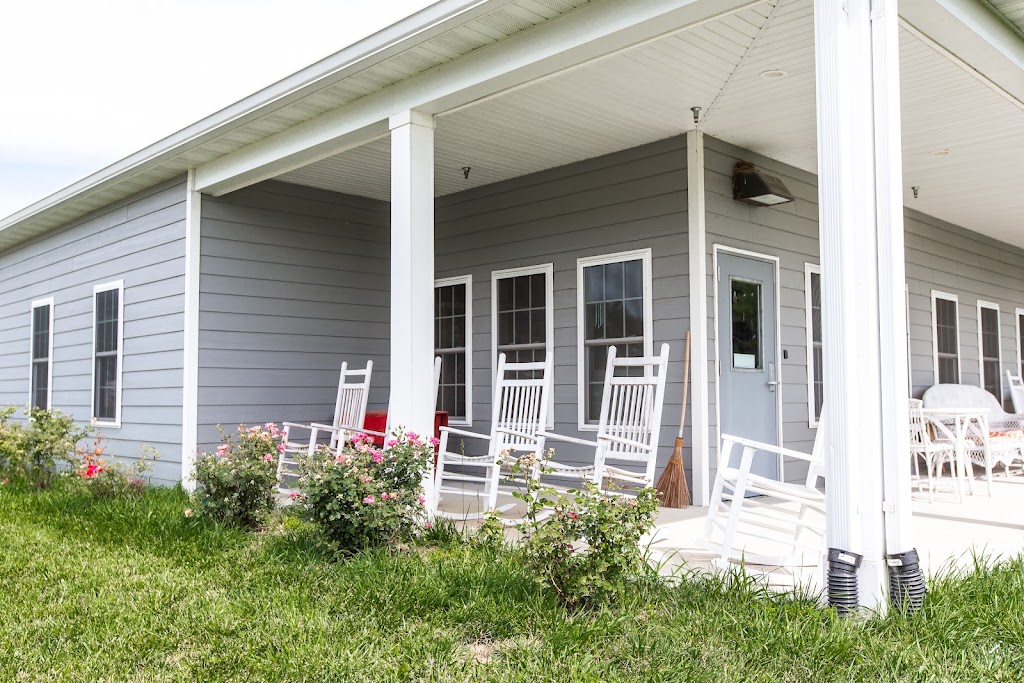
Joe's Place Caring Cottage provides assisted living, memory care, adult day, and respite in a small, homelike cottage at 1032 Hartman Lane in O'Fallon. We welcome questions about our license, our care, and our contract. Call (618) 607-9906 or read our frequently asked questions.
Frequently asked questions
Who licenses assisted living in Illinois?
The IDPH Division of Assisted Living licenses and surveys assisted living and shared housing establishments under the Assisted Living and Shared Housing Act.
What is the difference between assisted living and shared housing in Illinois?
Shared housing is a free-standing residence for 16 or fewer people. Both must provide the same mandatory services and follow a social model of care.
Can a person with dementia live in Illinois assisted living?
A dementia diagnosis alone does not bar residency. The establishment must be able to meet the person's needs, and programs offering dementia care must provide a written disclosure.
How much notice is required before an involuntary discharge?
Generally 30 days' written notice, with a right to appeal. For nonpayment, the resident has 15 days to cure.
Sources
- IDPH: Assisted Living
- Illinois Assisted Living and Shared Housing Act, 210 ILCS 9/10
- 210 ILCS 9/75, residency requirements
- 210 ILCS 9/80, involuntary termination
- 210 ILCS 4/15, dementia care disclosure
- Illinois HFS: Supportive Living Program fact sheet
- AgeSmart Community Resources: St. Clair County services